What Is Kooth Web App Review About?
Kooth web app review is our deep dive into Kooth, a digital mental health platform designed to give young people free, safe and anonymous support when life gets heavy. Instead of long waiting lists and awkward phone calls, Kooth offers a web-based space where you can log in, vent, reflect and get guidance at your own pace. It brings together counselling, self-help tools and a supportive community under one digital roof.
The Kooth web app focuses mainly on children, teens and young adults, typically aged 10–25, in regions where health services, schools or local authorities commission the platform to be free at the point of use. You’ll find text-based chats with qualified practitioners, moderated peer forums, short wellbeing activities, a journal and articles on everyday mental health struggles. In short, it’s like having a mental health hub in your browser – private, approachable and ready when you are.
How Kooth Web App Works
Kooth web app review looks at how Kooth blends professional help, peer support and self-guided tools into one streamlined experience. Once you’ve created an anonymous account, you can explore different paths depending on what you need that day: one-to-one text chats with counsellors, quiet journaling, quick mood-boosting activities or reading personal stories from others who “get it.” Everything happens through a web app, and in many areas Kooth is available 24/7, with counsellors online during set hours each day.
Because Kooth is commissioned by health systems and local authorities, it’s usually free for eligible young people in that region. You don’t need a referral, and you can stay anonymous, which lowers the barrier if you’re nervous about asking for help. The platform is designed as early and intermediate support for low to moderate mental health needs – think anxiety, stress, low mood, exam pressure and relationships – rather than a replacement for crisis or intensive psychiatric care.
Kooth Web App Review – Key Features
- Free access for eligible young people in commissioned areas
- Anonymous sign-up with no referral required
- Text-based counselling with qualified practitioners during set hours
- Moderated peer forums and live discussion boards
- Self-help library with articles, activities and podcasts
- Personal journal and goal-setting tools
- Mini wellbeing activities and mood-boosting exercises
- Accessible via web browser on desktop, tablet or mobile
How To Get Started With Kooth Web App
Getting started with Kooth via our Kooth web app is refreshingly simple. There’s no awkward phone call, no GP letter, no “tell us your entire life story” questionnaire before you can even peek inside. If Kooth is available in your area, you can sign up online using just a few basic details, choose an anonymous username and begin exploring straight away. For young people who already feel overwhelmed, that low-friction start is a big win.
- Go to the Kooth website from your browser.
- Click to sign up and confirm your area or region.
- Check that Kooth is commissioned where you live or study.
- Create an anonymous username and secure password.
- Answer brief onboarding questions about how you’re feeling.
- Confirm your account and log in to your personal dashboard.
- Browse the magazine and self-help articles tailored to common issues.
- Try a mini activity or journaling task to get familiar with the tools.
- Explore forums and read others’ posts before you decide to share.
- When ready, book or join live text chats with counsellors during service hours.
Once you’re in, you can treat Kooth like a mental health “gym”: you pop in regularly, do small bits of work on your wellbeing and slowly build emotional strength. Mr. Healthy would call it mental strength training, while Ms. Exercise would remind you that progress is in the tiny reps – one journal entry, one chat, one coping tool at a time. You stay in control of how much you share and how often you use it.
Kooth Web App Vs. Other Mental Health Apps
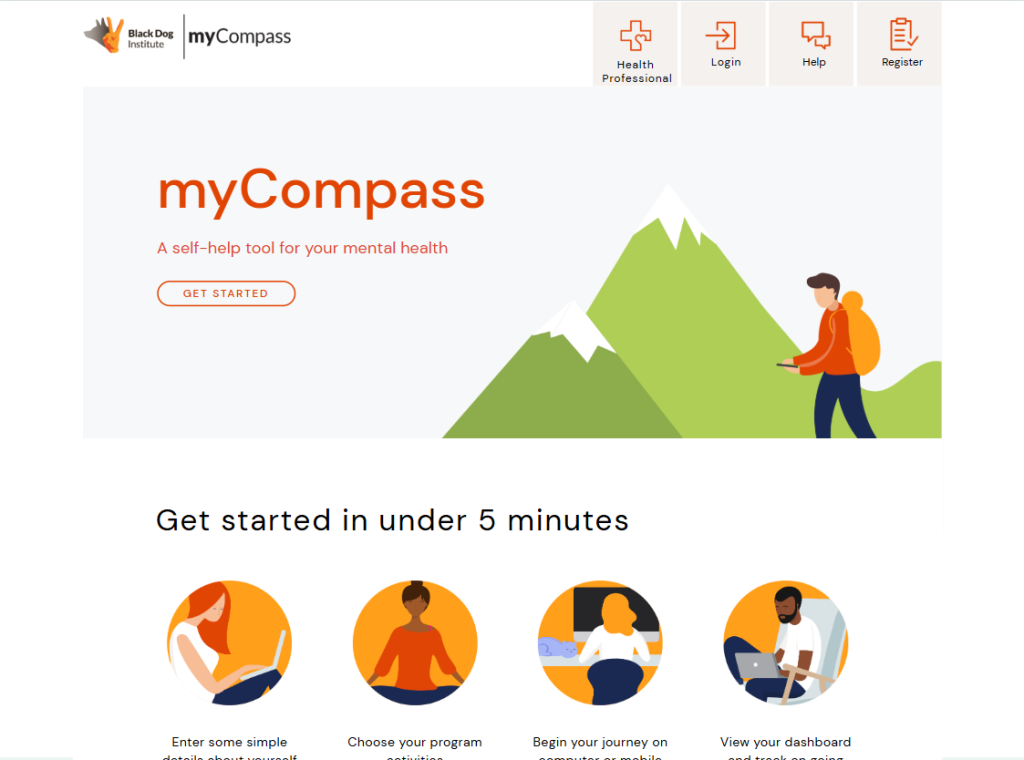
The mental health app space is crowded, and honestly, a bit confusing. You’ll find specific tools for self-harm urges, full-blown therapy companions, all-in-one health platforms and structured online programs for anxiety and depression. In this Kooth web app review, we’re zooming in on how Kooth compares to DBT Coach, Calm Harm, Gro Health and myCompass – four well-known digital tools with different approaches and price tags.
Where DBT Coach acts like a comprehensive DBT skills tutor, Calm Harm focuses narrowly on self-harm urges. Gro Health is a broad “whole health” platform, and myCompass is a structured self-help program using CBT for mild to moderate anxiety, depression and stress. Kooth, by contrast, positions itself as a free, anonymous, youth-focused digital service that combines self-help content, community and real-time contact with mental health practitioners, funded mainly through health and education systems rather than individual subscriptions.
| Name | Focus | Pricing | Best For |
|---|---|---|---|
| Kooth Web App | Youth digital counselling & community | Free in commissioned areas | Young people 10–25 |
| DBT Coach | Dialectical Behaviour Therapy skills | $11.99/month subscription | Users in DBT therapy |
| Calm Harm | Self-harm urge management | One-time $1.99–$2.99 | Teens with self-harm urges |
| Gro Health | All-in-one health management | In-app purchases from ~$25 | Adults with wider health goals |
| myCompass | CBT self-help for mood | Free online program | Adults with mild symptoms |
Kooth Web App Review – Summary
What makes Kooth web app review’s subject stand out is its funding and focus. Instead of asking you to pull out a bank card, Kooth is typically paid for by health systems, schools or local authorities, making it free to access for eligible young people. That instantly lowers a massive barrier to support compared with DBT Coach and Gro Health, which rely on individual subscriptions or in-app purchases.
Kooth also sits in a sweet spot between self-help tools and full therapy programs. Calm Harm and myCompass are strong, but they address specific niches: either managing self-harm urges or following a CBT-style structured program. Kooth combines moderated peer support, counsellor chats and self-help content in a single, youth-friendly web platform – with anonymity as a core design principle. If you’re a young person who wants human connection plus flexible tools, without subscription stress, Kooth can feel much more like a digital “home base” for mental health than a single-purpose app.
Kooth Web App Cost
Kooth’s pricing model is different from most mental health apps: instead of charging individual users, Kooth is commissioned and funded by organisations such as the NHS, local authorities, schools and health systems. That means young people in those regions can access the Kooth web app for free, with no subscription, credit card or in-app purchase required.
Kooth Web App Review – Pricing Overview
For end users, Kooth is a free, anonymous digital mental health service in areas where it has been commissioned. Children and young people (often around ages 10–25 can sign up and use counselling, forums, journals and self-help tools without paying anything out of pocket. For organisations, Kooth operates on a contract or licensing model, but that’s handled behind the scenes by commissioners rather than by young people themselves.
- Free access to text-based counselling sessions within service hours
- Free use of moderated peer forums and community features
- Free access to self-help articles, activities and podcasts
- Free journaling, goal-setting and wellbeing tools
Deals & Discounts
Because Kooth is funded through health systems and organisational contracts, you don’t really see classic “deals” like coupon codes or Black Friday sales. The biggest “deal” is that, if Kooth is commissioned in your area, you get professional digital support at zero personal cost. Occasionally, local campaigns and schools will promote Kooth to boost sign-ups and awareness, but the service itself remains free for eligible users.
- Local awareness campaigns encouraging free sign-ups during exam or stress seasons
- School or college information sessions explaining how to access Kooth for free
- Partnerships with community organisations to increase visibility of the free service
Pros & Cons
Pros
✅ Completely free to use for young people in commissioned regions, with no personal payment needed.
✅ Anonymous, text-based access reduces stigma and makes opening up feel safer, especially for shy or anxious users.
✅ Blends professional counselling, moderated community and self-help tools into one platform for flexible support.
✅ No waiting list or referral in many areas, offering quicker access than traditional services for low to moderate needs.
Cons
❌ Availability depends on local commissioning, so not everyone globally can access Kooth for free.
❌ Text-only counselling may feel limited if you strongly prefer video, voice or in-person conversations.
❌ Not designed for crisis or high-risk situations, so you still need external emergency or intensive services when things are severe.
Final Verdict: Is Kooth Web App Worth It?
Kooth web app review finds Kooth to be a strong option if you’re a young person looking for low-barrier mental health support without the financial pressure or clinical intensity of formal therapy. It won’t replace crisis services and may feel basic if you want high-intensity treatment, but as a free, anonymous, youth-focused hub that combines counsellors, community and self-help resources, it punches well above its (zero price tag. For many, it’s a solid first step on the mental health ladder.
Best For
- Young people aged roughly 10–25 in areas where Kooth is commissioned.
- Students dealing with stress, anxiety, low mood, school pressure or relationships.
- Anyone nervous about traditional services who wants anonymous, text-based support.
- People who like a mix of self-help, community and professional input.
Not Ideal For
- Adults outside Kooth’s age range or regions without commissioning.
- People needing intensive, long-term psychotherapy or psychiatric care.
- Users who strongly prefer video/voice therapy over text chat.
- Those in immediate crisis who need emergency or crisis-line support.
Fun Fact
Kooth’s parent organisation also runs Qwell, a similar digital mental health platform designed for adults – so the same team behind Kooth keeps one foot in youth mental health and one in grown-up world worries.
Kooth Web App Review – Conclusion
If you’re a young person who wants support that feels more “chatting online” than “sitting in a clinic,” Kooth is well worth a try where it’s available. Think of it as a gentle on-ramp to looking after your mind: you can lurk, explore tools, talk to counsellors, share in forums and gradually build confidence. As Mr. Healthy and Ms. Exercise would say, you don’t have to overhaul your life overnight – just log in, start small and keep moving.
Kooth Web App Frequently Asked Questions – FAQs
1. What Exactly Is Kooth Web App Review About?
Kooth web app review is our in-depth look at Kooth, a digital mental health platform that offers free, anonymous counselling, community support and self-help tools for young people in commissioned regions.
2. Who Is Kooth Designed For?
Kooth mainly targets children, teens and young adults, often around ages 10–25, living in areas where local health systems, schools or councils fund the service so it’s free at the point of use.
3. Is The Kooth Web App Really Free?
Yes, if you live in a region where Kooth is commissioned, you can sign up and use its counselling, forums and self-help tools for free. Funding comes from organisations like the NHS or local authorities, not from users.
4. How Does Kooth Protect My Privacy?
Kooth allows anonymous sign-up with a chosen username, and you don’t need a referral. The platform is designed as a safe, confidential space with moderated forums and secure text-based counselling. You stay in control of what you share.
5. What Kind Of Support Can I Get On Kooth?
You can access text chats with qualified practitioners, join moderated peer forums, read articles, do mini activities, journal and set goals. It’s a mix of professional support, community and self-guided tools for low to moderate mental health concerns.
6. When Are Kooth Counsellors Available?
Counsellor availability varies slightly by region, but typically they’re online every day within set hours (for example, afternoons and evenings, while the site and self-help resources are accessible 24/7. Check your local service information after sign-up.
7. Is Kooth A Crisis Or Emergency Service?
No. Kooth is designed for low to moderate mental health needs and early support, not for emergencies. If you’re in crisis, you should contact local emergency services, crisis lines or urgent care, then consider Kooth as an additional support later.
8. How Does Kooth Compare To DBT Coach Or Calm Harm?
DBT Coach is a paid DBT skills tutor app, while Calm Harm is a low-cost tool focused on managing self-harm urges. Kooth is free where commissioned and offers broader youth support with counsellors, forums and self-help tools in one web platform.
9. Can Adults Use Kooth?
Kooth is designed primarily for young people and has defined age ranges that differ by region. Adults may instead be directed to Qwell, a sister platform offering free, anonymous digital mental health support where commissioned.
10. Do I Need A Doctor’s Referral To Use Kooth?
No referral is required. If Kooth is commissioned in your area and you’re within the eligible age range, you can self-refer by signing up on the website, creating a username and completing a short onboarding process.
11. What Devices Can I Use For Kooth?
Kooth is mainly a web app, so you can use it on any modern browser via smartphone, tablet, laptop or desktop. As long as you have a stable internet connection and a private screen, you’re good to go.
12. Is Kooth Evidence-Informed Or Linked To The NHS?
Yes. Kooth is commissioned as an NHS digital mental health service in multiple regions and is used in partnership with health and education systems, positioning it as an evidence-informed, clinically governed option for online support.
13. What Are The Main Limitations Of Kooth?
Limitations include regional availability, age restrictions, and the fact that support is text-based and not suited for crisis or severe mental illness. It should complement, not replace, face-to-face or intensive clinical care where those are needed.
14. Can I Access Kooth If I’m Not In A Commissioned Area?
If Kooth isn’t commissioned where you live, you may not be able to sign up or access full services. In that case, consider other options like myCompass, DBT Coach, Calm Harm or local mental health services as alternatives.
15. How Often Should I Use Kooth To See Benefits?
There’s no strict rule, but many people benefit from using Kooth regularly – for example, journaling a few times a week, dipping into forums and arranging chats when things feel heavier. Consistency tends to build more insight and coping skills over time.